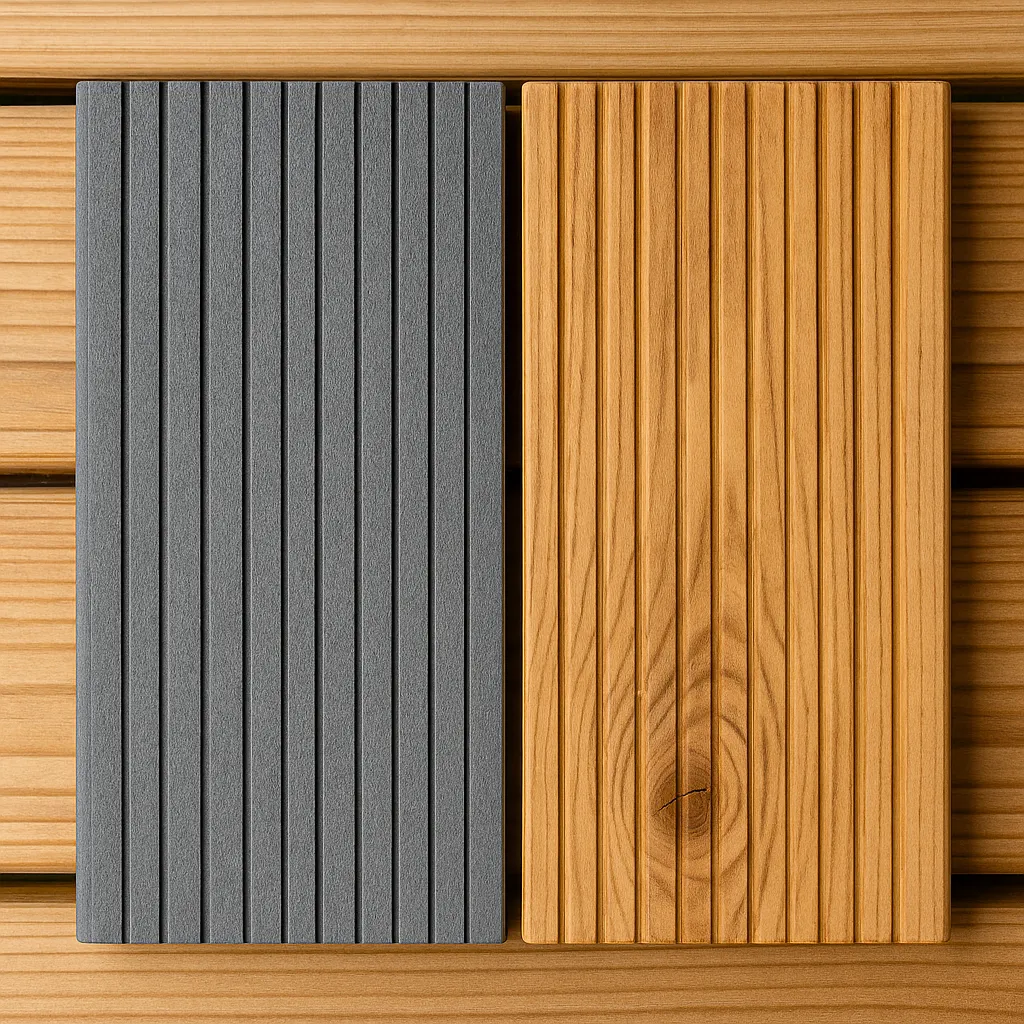
We install composite decking for a living. Which means you might expect us to tell you composite wins every time. But the honest answer is more nuanced than that, and getting it right matters, because a deck is a significant investment and the wrong material for your situation is a costly mistake.
Here's what we actually think, having installed both materials across hundreds of projects in Norfolk.
1. Upfront Cost
Timber is cheaper upfront. Pressure-treated softwood decking boards cost roughly £8–14 per linear metre for materials. Composite boards, depending on the brand and range, run from £25–65 per linear metre.
On a 30m² deck, that difference in materials alone might be £1,500–2,500. That's real money.
But this is only half the picture, which is why the comparison doesn't end here.
2. Lifetime Cost
Timber decking needs treating every 1–2 years. A decent timber treatment product costs £30–60 per tin, and a 30m² deck will take 2–3 tins per application. That's £100–180 per year in materials alone, not counting your time, or the cost of hiring someone to do it.
Over 15 years, that's roughly £1,500–2,700 in maintenance, just on treatment. By that point, most softwood decking also needs sections replaced, at further cost.
Quality composite decking carries a 25-year fade and stain warranty and requires no annual treatment. A brush down and occasional rinse is all it needs. Over 20 years, composite typically costs less in total than timber once you factor in maintenance.
"The question isn't which is cheaper. It's which costs less over the time you'll own the deck."
3. Day-to-Day Maintenance
Composite
- Brush off debris and leaves regularly
- Occasional wash with warm soapy water
- Trex CleanSweep for stubborn marks
- No staining, no sealing, no oiling
- Will not splinter, safe for bare feet
Timber
- Annual or biennial treatment essential
- Sanding before each treatment cycle
- Check for rot, especially at board ends
- Replace splintered or warped boards
- Splinters develop as timber ages
If you enjoy maintaining your garden and don't mind an annual treatment day, timber is a completely viable choice. If you'd rather never think about the deck again, composite is almost certainly the right answer.
4. Appearance Over Time
This is where opinions get personal. New pressure-treated timber is a genuine pleasure, the warm, natural colour of fresh wood is something composite can imitate but not fully replicate. Many people find freshly-laid timber more attractive than composite on day one.
The problem is what happens next. Untreated timber greys significantly within a season. Even treated timber changes colour year on year. Composite, particularly quality brands like Trex, is specifically engineered to resist fading, with a 25-year warranty to back it up. It will look similar in year 10 to how it looked in year 1.
If you want the look of genuinely natural wood and are happy to maintain it, timber has an aesthetic argument. If you want something that looks consistently good with minimal effort, composite wins.
5. Sustainability
This one surprises people. Trex composite boards are made from 95% recycled materials, reclaimed wood fibres and used plastic film diverted from landfill. The manufacturing process does use energy, but so does sourcing, treating, and regularly re-treating timber.
UK-sourced, sustainably certified timber (look for FSC or PEFC certification) is a credible eco-choice. But most of the cheap pressure-treated softwood sold in the UK comes from Scandinavia or Eastern Europe, with associated transport emissions. Recycled-content composite is harder to dismiss on environmental grounds than many assume.
6. When Timber Actually Makes More Sense
We'll be straightforward: there are situations where we'd recommend timber over composite.
- Very tight budget, short-term use. If you're selling the house in two years and need a deck that looks decent for viewings, the upfront saving of timber makes sense.
- A listed building or conservation area. Some planning authorities won't approve composite materials on visible decks. Timber may be required for aesthetic or heritage reasons.
- You genuinely prefer the look of natural wood and are committed to maintaining it. There's nothing wrong with this.
- Bespoke structural carpentry. For complex pergola beams, balustrade posts, or decorative joinery, timber offers more flexibility than composite boards.
The Verdict
For most Norfolk homeowners who want a deck that looks great, lasts decades, and requires minimal effort, composite decking is the right answer. The upfront cost is higher; the total cost of ownership is comparable or lower; and the maintenance comparison isn't close.
If you're unsure, come and see some of our installed projects in person. We'll show you what both materials look like after five years in a Norfolk garden, and let you draw your own conclusions.